Neolithic ceramic traditions at Theopetra cave, Thessaly

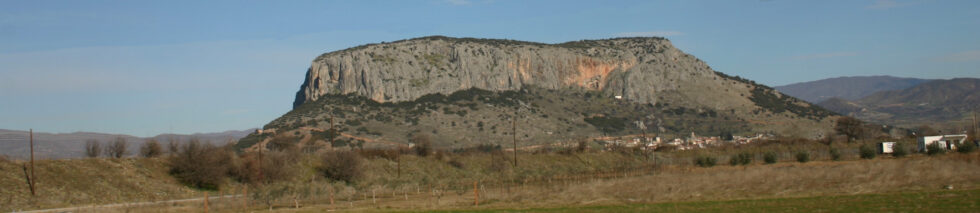
After the Paleolithic and the Mesolithic, Theopetra cave was occupied by agro-pastoral communities beginning in the Early Neolithic (7th millennium BC). Its use reached a peak during the Middle and Late Neolithic (6th millennium BC), when occupation became systematic and permanent. During the 5th millennium and toward the end of the Neolithic, the use of the cave became more sporadic, perhaps restricted to ritual activity. The cave’s location beside the river, overlooking the Thessalian plain and offering unobstructed views toward the Pindos mountains, endowed it with exceptional natural advantages for every phase and form of use.

The abundant ceramic remains include both painted vessels and large quantities of undecorated pottery. These simpler vessels display great variability in form and size (cups, bowls, necked vessels, small and large storage jars, cooking pots), reflecting domestic activities across the full spectrum of everyday life. Toward the end of the 6th millennium BC, an increase in storage jars is observed, indicating intensified storage practices and the systematic use of the rear areas of the cave for their placement. The final, sparse and possibly “ritual” phases of use are associated mainly with the peripheral spaces of the chamber.

Some vessels bear relief decoration, most commonly fingernail impressions—a decorative technique that persists for many centuries, forming a long-standing local tradition at Theopetra. Over time, fingernails were combined with tool-made impressions and finger-pressed motifs. Certain serving and drinking vessels were produced with intense burnishing and uniform black or red surfaces. Others display polychrome and variegated visual effects achieved through different coating and firing techniques: tonal variation, zoned coloration, layered surfaces, and chromatic contrast between interior and exterior faces. Although these vessels lack painted decoration, they are nonetheless “decorated” through other effects created with the deliberate manipulation of slips, surface treatments, and firing processes. Domestic wares therefore reveal complexity, decorative quality, and chromatic richness, so that the commonly used term “monochrome” is overly simplistic and misleading. In fact, the manufacturing techniques and ceramic traditions were far from static but continually transformed through the specific conditions of production and even use of each vessel.

Deposition of ceramic remains in the cave, once the vessels had become unusable, does not appear a random practice. Rather, it seems to represent a deliberate and meaningful behavior, potentially imbued with symbolic significance, even if operating at a subconscious level. The on-site burial of ceramic debris may have emphasized the importance of the cave as an ancestral place and a locus of memory for successive generations. This ideology of connection to place and landscape is already well attested in the tell villages of the Thessalian plain formed by continuous habitation exactly on top of the remains of earlier houses. In this sense, pottery—once discarded—becomes the primary material through which this continuity is “constructed.” Within the cave, a comparable “tell” formed through successive depositional layers symbolizes the continuity and long-term history of the cave community in the same place.


Research by the Ephorate of Paleoanthropology-Speleology

2026, S. Katsarou, Color fashions in the Greek Neolithic: overlaps and interactions across painted styles. In: T. Dzhanfesova (ed.), Reading the Patterns: exploring Balkan Painted Pottery within Neolithic context (7th-mid 6th mill. BC). Oxford University Press.

2026, S. Katsarou, Monochrome clay vessels at Theopetra Cave. Fashions, crafting techniques and community identities. In: N. Kyparissi-Apostolika, G. Marshall, O. Apostolikas (eds.), Theopetra Cave in Thessaly, Greece, Vol. I: The Neolithic period. Athens. Ministry of Culture, Hellenic Organization of Cultural Resources Management and Development Publications.

2025, S. Katsarou, Caves and ritual activity in prehistory. In: F. Georgiadis, A. Gadolou (eds.), In the Cave. Stories from Darkness Brought to Light. Publication Realized on the Occasion of the Exhibition “In the Cave: Stories from Darkness Brought to Light” Organized by the Ephorate of Palaeoanthropology-Speleology and the Archaeological Museum of Thessaloniki, in May 2025, pp. 130-147. Ephorate of Palaeoanthropology-Speleology & Archaeological Museum of Thessaloniki. Editions Melissa.

2025, S. Katsarou, Cave excavations and their contribution to understanding Greek prehistory, Half a Century of Cave Protection and Research. Symposium Dedicated to the Memory of Evangelia Protonotariou-Deilaki, Athens, Epigraphic Museum, 9 October 2025 (Organizer: Ephorate of Palaeoanthropology-Speleology). [in Greek]

2021, S. Katsarou, The dawn of ancient Greek cave cult: Prehistoric cave sanctuaries. In: S. Katsarou, A. Nagel (επιμ.), Cave and Worship in Ancient Greece. New Approaches to Landscape and Ritual, pp. 17-48. London/New York. Routledge. https://doi.org/10.4324/9781003015765-2

2018, S. Katsarou, Beyond transition: tracing eventfulness behind the Middle Neolithic-Late Neolithic ceramic divide. Στο: S. Dietz, F. Mavridis, Ž. Tankosić, T. Takaoğlou (eds.), Communities in Transition. The Circum-Aegean Area During the 5th and 4th Millennia BC, pp. 234-241. Oxford. Oxbow. Monograph of the Danish Institute at Athens 20. https://doi.org/10.2307/j.ctvh1dtp5.29

2013, S. Katsarou, Beyond Transition: Tracing eventfulness behind the Middle Neolithic-Late Neolithic I ceramic divide, Communities in Transition. The Circum-Aegean Later Neolithic Stages (ca. 5,000/4,800-3,200/3,000 BC). International Conference at the Acropolis Museum, Athens, 7-9 June 2013 (Organizers: The Danish Institute at Athens).

2012, S. Katsarou, Crafting identities by fingernail designs on Greek Neolithic pot surfaces, Crafts and People. Agents of Skilled Labour in the Archaeological Record. International Conference Held at the British Museum, London, British Museum, 1-2 November 2012 (Organizers: S. Strack, M. Uckelmann, B. Roberts).

2009, S. Katsarou, Colorful images of the Greek Neolithic, Theoretical Archaeology Group-USA 2009, Stanford, CA, 1-3 May 2009: The Color of Things: Debating the Role and Future of Color in Archaeology (Οργανωτής: A. Nagel, University of Michigan). Oral text uploaded at www.academia.edu.

2000, S. Katsarou, Monochrome wares as indicator of a process of choice: The case of Theopetra cave. In: N. Kyparissi-Apostolika (ed.), Theopetra Cave. Twelve Years of Excavation and Research. Proceedings of the International Conference (Trikala, 6-7 November 1998), pp.  235-261. Athens. Ministry of Culture. [in Greek]