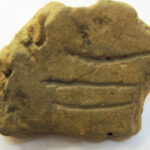

The Neolithic ceramics used by the small, scattered communities of early farmers in the inland areas of northern Attica during the late 7th and 6th millennia BCE show clear similarities, suggesting the existence of a core local ceramic tradition around which local variations developed. Common features are found in the shapes of the vessels: plain hemispherical bowls with thin walls, very few closed vessels featuring a neck. Other shared traits include light-colored, matt surfaces, often with a characteristic soapy texture, iridescent hues, and, less frequently, a black-red contrast between the two surfaces of the vessels.
Despite their household purpose, these vessels reveal increased care, evolving skills, and technical innovations: variations in coloration may reflect experimentation and the shaping of new fashions that mark different identities of communities. Color variations could also be interpreted as a form of decoration, given that other ornamental elements on the pots, such as incisions, protrusions, or painted patterns, are rare. There are similarities between these ceramics and other assemblages from settlements on the coast or towards the southern part of Attica. However, compared to other regions of mainland Greece, like Boeotia, Thessaly, or the Peloponnese, this ceramic tradition looks modest and lacks painted decoration and complexity of patterns.