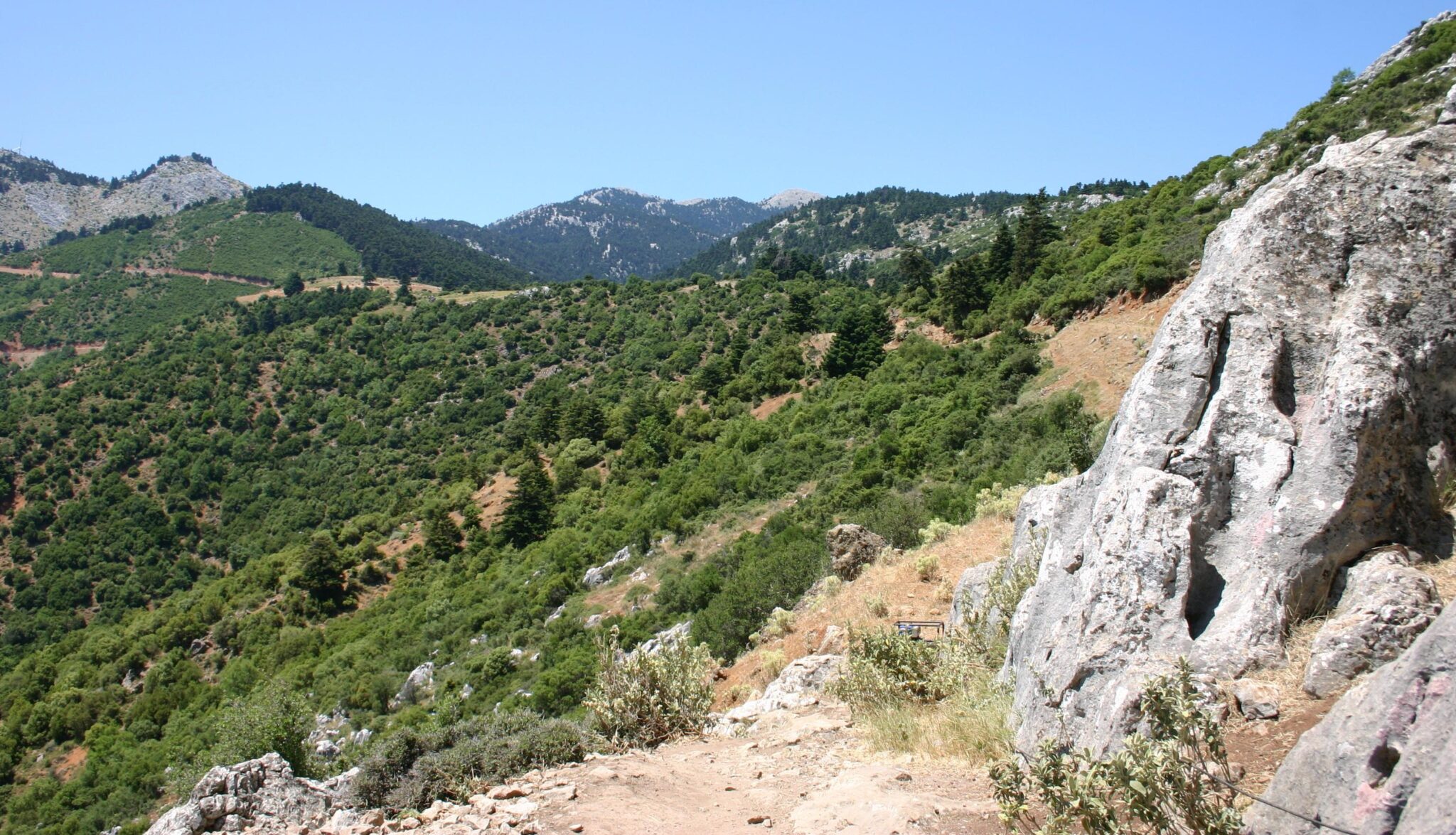

The cave is situated at an altitude of approximately 900 meters close to the city of Livadia. It is well known for its use in antiquity as a sanctuary dedicated to the Nymphs, Pan, and other deities, which attracted pilgrims from across Greece. However, the cave’s ancient cultic use was preceded by successive prehistoric occupations, including evidence of Middle Bronze Age fireplaces (early 2nd millennium BC) as well as scattered finds from the Early Bronze Age and the Neolithic period (3rd and 4th millennia BC).
Ceramic vessel fragments constitute the most abundant remains. Typical, large handmade basins featuring triangular rims adorned with small knobs date from the end of the Neolithic and the beginning of the Early Bronze Age. During the Middle Bronze Age, vessels at the cave included both hand-built and wheel-made specimens. The hand-built vessels were coarse, often darkly burnished, decorated with incised or grooved patterns; one cooking pot even has a perforation near its base. The wheel-made vessels included thin-walled cups with gray surfaces, typically Minyean in style. It is likely that the cave was used primarily during the summer months by pastoralists who moved their herds seasonally to the highland plateaus of Helicon. Ritual practices may also have been part of these subsistence activities.